My research studies representation learning for low signal-to-noise data, where the signal worth learning is small next to the noise and changes over time. Financial markets are the main testbed. The three lines below ask what to discretize, which structure to build into a model, and how to keep models interpretable and robust.
Discrete Representation Learning
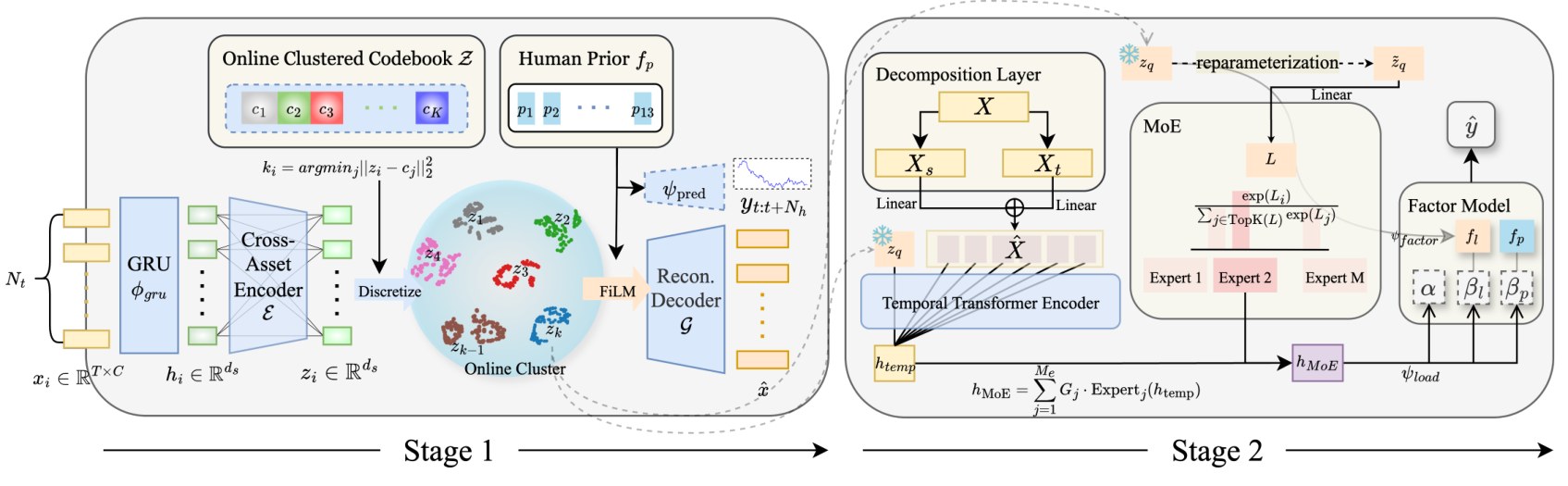
Learning discrete latent factors with vector quantization from noisy cross-sectional stock data and fusing them with financial priors for stock ranking and portfolio construction. The next step discretizes market states by the portfolio decision they call for rather than by statistical similarity.
Papers and talks
Projects
Structure-Informed Learning
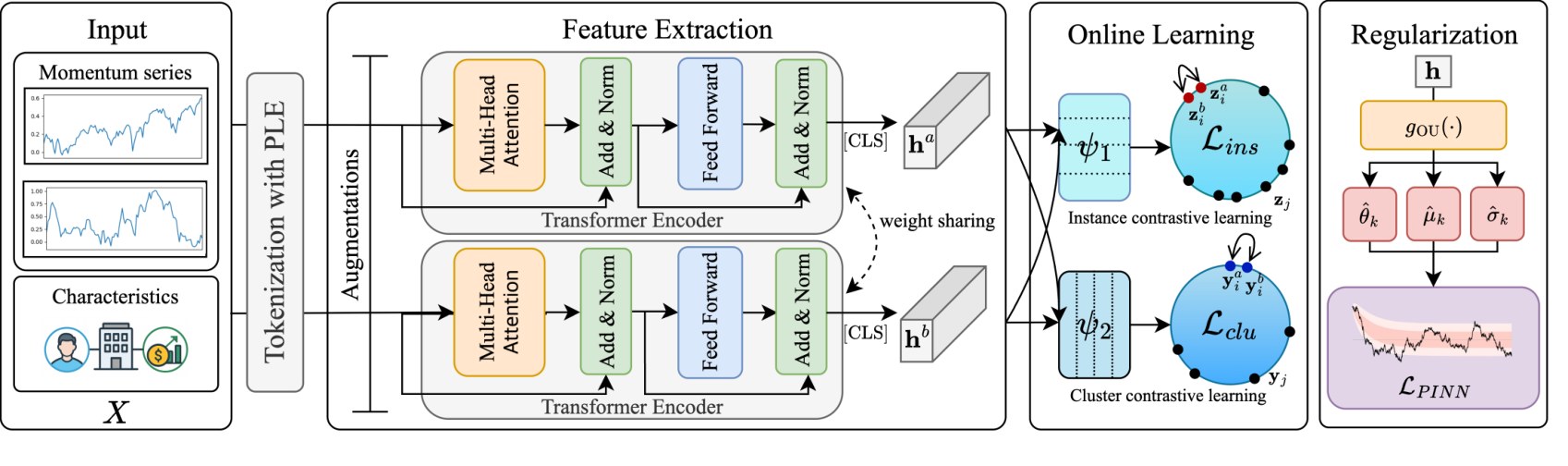
Building known dynamics of financial time series into neural models as inductive bias, such as mean reversion, the heterogeneous autoregressive structure of volatility, and time-series decomposition, so that the models hold up under regimes not seen in training.
Papers and talks
Interpretable and Group-Robust Models
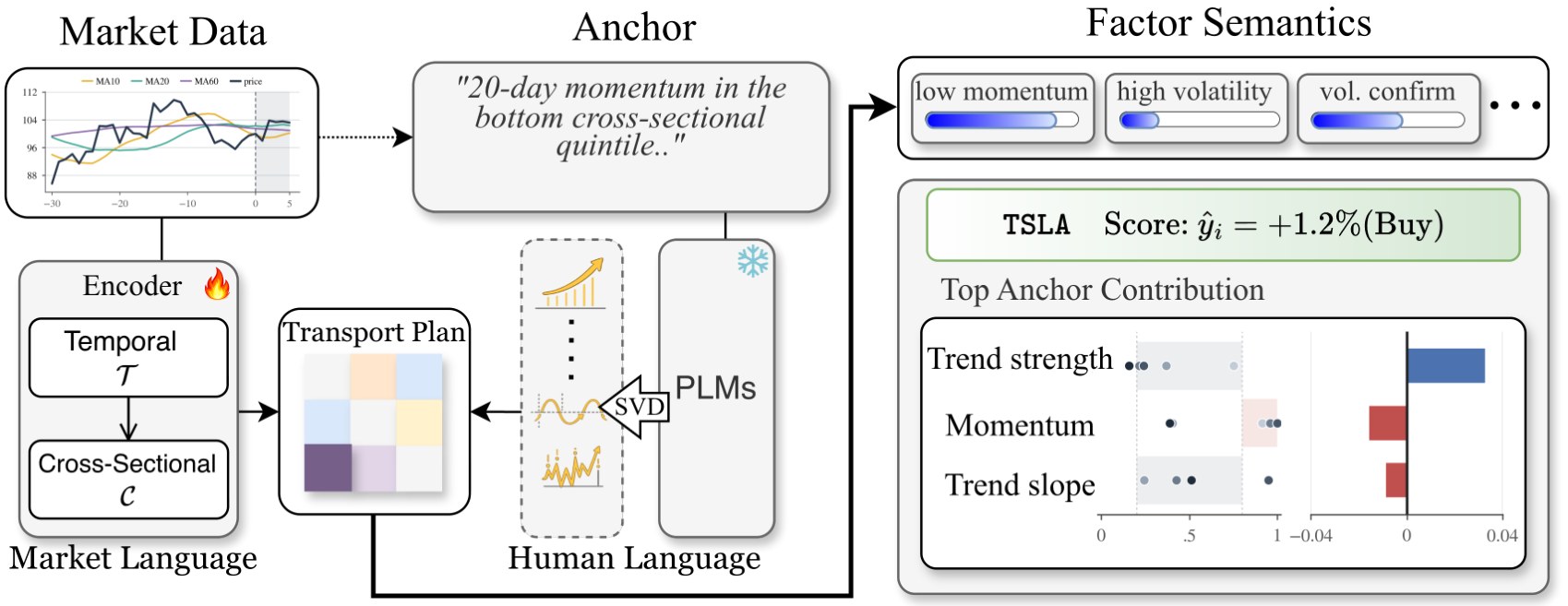
Making factor models and decision policies explainable and robust across groups: composing factors from language-grounded anchors that describe observable financial states, so that each factor can be read and every prediction decomposes exactly into named contributions; defining groups by text for distributionally robust stock ranking; and coupling group robustness with interpretable hedging policies.